

Quick answer: Delivering superior digital means producing customer-facing websites, apps, and marketing that work reliably for users and for business goals. It includes end-to-end web design and development for brand and product sites, data-driven digital marketing, custom mobile app development, brand identity and graphic design, plus quality assurance and responsive post-launch support. What matters most is a clear Discovery → Strategy → Development → Launch sequence with defined scope, stakeholder approvals, testing gates, and a low-friction path to a free quote or consultative engagement.
Why the phrase delivering superior digital matters to business buyers
For a marketing manager, founder, or product owner, "delivering superior digital" is a service promise that ties creative craft to operational reliability. It is not only about a pretty homepage: it covers the complete lifecycle of a digital product — design, build, marketing activation, and support — and it must fit constraints such as legacy back-office systems, available content, and stakeholder availability.
Relevant scope boundaries that buyers should set early include whether the agency will:
- Own technical hosting and maintenance or hand over artifacts to an internal team;
- Provide marketing setup (campaigns, tracking, ad creative) or only hand over creative assets;
- Build native mobile apps, progressive web apps, or responsive websites;
- Include brand identity refresh alongside interface design or keep visual work separate.
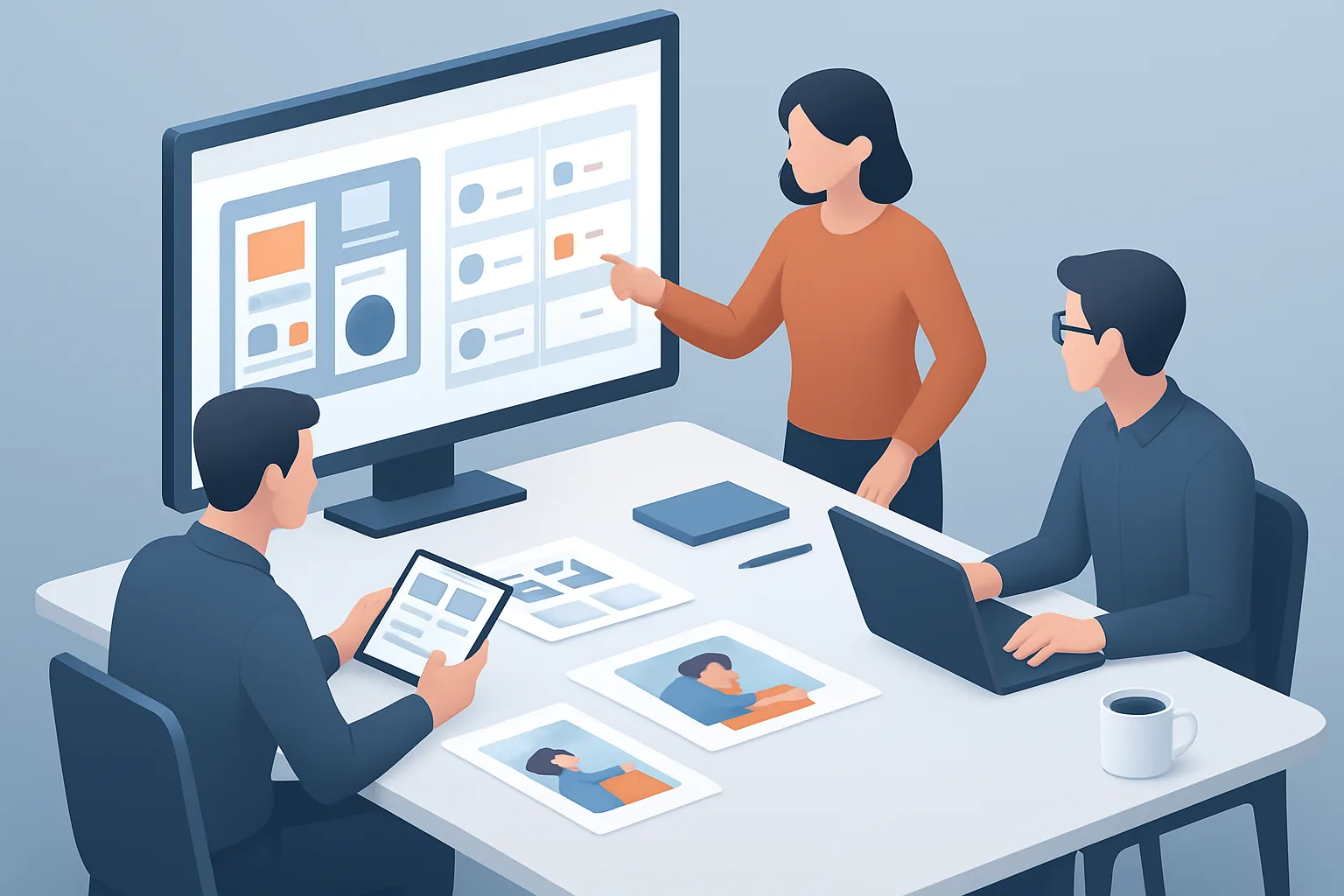
most agencies structure this as Discovery → Strategy → Development → Launch with clear acceptance criteria at each gate. That sequence reduces rework and keeps change requests visible to the CFO and COO during budgeting conversations.
Core capabilities that define delivering superior digital
This section lists the concrete services and why each matters for project success:
- End-to-end web design and development for brand websites and product sites — includes UX flows, component libraries, CMS integration (for example: WordPress with a headless API or a custom React front end), accessibility checks, and hosting configuration.
- Data-driven digital marketing — campaign setup, audience segmentation, content planning, conversion funnel design, and reporting cadence that connects to business objectives such as lead generation or product sales.
- Custom mobile app development — native (iOS/Android) or cross-platform frameworks, integration with product APIs, and versioned releases for app stores.
- Graphic design and brand identity — logo systems, iconography, photography art direction, and product packaging visuals that are export-ready for web and print.
- Quality assurance, maintenance, and responsive post-launch support — bug triage, release windows, uptime monitoring, and a service-level rhythm for fixes and improvements.
Each capability requires different resource mixes and timelines. For example, a brand site plus identity refresh needs more design iterations and stakeholder approvals; an incremental app needs technical sprints and a mobile release plan.
Implementation framework: turn the plan into an execution sequence
Below is a pragmatic sequence with explicit decisions and artifacts at each step.
Discovery (2–4 weeks, variable)
- Output: project brief, stakeholder map, content audit, technical constraints document (APIs, existing CMS, analytics access).
- Key decisions: scope (pages, functionality), success criteria (business outcomes), governance (single stakeholder approver vs committee), budget ceiling.
- Caution: projects stall when content is not available. A corrective decision is to budget a content sprint or use staged launches.
Strategy (2–3 weeks)
- Output: sitemap, information architecture, user journeys, preliminary interaction design, and a measurement plan that defines which metrics matter to the product owner.
- Key decisions: template vs custom build, single codebase vs separate microsites, native app vs progressive web app.
- Tools commonly used: Figma for design, Confluence or Google Docs for strategy artifacts, Airtable or Jira for backlog.
Development (4–12+ weeks depending on scope)
- Output: production-ready site or app, component library, automated tests, content migration scripts.
- Key decisions: hosting provider, CDN configuration, third-party integrations (payment gateways, CRM), release cadence (weekly sprints or feature toggles).
- Real constraint: integration with legacy ERP or order systems often requires a technical buffer in schedule and budget.
Quality assurance and Launch (2–4 weeks)
- Output: staging sign-off, UAT reports, accessibility conformance notes, deployment runbook.
- Key decisions: which issues block launch, who signs off final acceptance, and what rollback plan exists.
- Support setup: define SLA for critical fixes, weekly support window, and planned post-launch improvements.
Post-launch iteration
- Output: backlog of prioritized improvements, monthly reporting cadence, and scheduled maintenance windows.
- Note: the team should offer a low-friction path to request a quote for additional features; buyers often value the ability to expand scope without a long procurement cycle.
Concrete implementation example (compact)
Project: redesign and relaunch of an ecommerce brand site for a footwear label similar to Caryatis.
- Discovery: content audit found 3,500 product records; decision: migrate only top-selling 1,200 SKUs in phase one.
- Strategy: adopt a headless CMS with a React storefront for fast product filtering; agreed sitemap includes product detail templates with size guides.
- Development: two-week sprints; tooling: Figma, GitHub, Netlify for staging, Stripe for payments, and a lightweight CDN.
- QA and Launch: staging UAT with merchant team; launch on a Monday with a rollback plan and 48-hour developer-on-call window.
- Post-launch: one-month support for bug fixes and a roadmap for a native iOS shopping app.
This example illustrates scope trimming, tooling choices, approval rhythm, and launch safety nets.
When comparing execution options, weigh these concrete criteria: effort, risk, time-to-impact, and operational cost.
Short comparison table (summary):
- Off-the-shelf theme site: low effort, low technical risk, fast to impact, higher limitation on unique brand expression.
- Custom front end + headless CMS: medium effort, medium integration risk, fast to iterate on UI, higher initial development cost.
- Native mobile app: high effort, platform risk (store approvals), slower to impact, strong retention potential.
- Progressive Web App: medium effort, lower store friction, good cross-platform reach, some native feature limitations.
practical trade-offs to consider:
- If stakeholder approval cycles are long, favor phased releases and smaller deliverables that can be signed off quickly.
- If internal IT cannot support hosting, consider agency-managed hosting and maintenance to reduce operational burden.
- Where product photography or brand visuals are weak, budget additional photography and graphic design time — visual assets often drive conversion in retail projects.
Common mistakes and how teams correct course
-
Mistake: vague success criteria. Correction: require measurable acceptance criteria during Discovery and link them to business owners.
-
Mistake: underestimating content migration work. Correction: run a content triage early and budget a content migration sprint; allow sample approvals for templates.
-
Mistake: siloed handoff between design and development. Correction: create a shared component library and include developers in design review sessions.
-
Mistake: no post-launch support plan. Correction: define a support package with response windows, maintenance tasks (security patches), and a monthly reporting cadence.
Each of these mistakes ties to governance and approvals — naming who can sign off and when prevents late-stage scope creep.
Selected case-style sketches (what buyers actually get)
- Fiskars-like product catalog rebuild: brand identity refresh, category rework, and a modular product page template that supports seasonal merchandising.
- Caryatis-style boutique ecommerce: staged SKU migration, expedited checkout flow, and photography art direction for product detail pages.
- Dita/Pojo-type tech product site: concise marketing pages, downloadable assets for sales teams, and a developer handbook for future integrations.
These sketches reflect the blend of brand work, engineering, and launch planning buyers should expect.
Practical next steps for decision-makers
- Request a short Discovery session and a free quote to surface assumptions and a realistic scope. See Services for a service overview and Works to review portfolio examples.
- Prepare a content and stakeholder inventory before the initial call: list content owners, existing analytics access, and any third-party systems that must connect.
- Insist on a documented acceptance gate before any launch and include a 30–60 day post-launch support window in the contract.
If you want a rapid read on project fit, ask the prospective partner for a Discovery checklist and a sample Statement of Work that uses the Discovery → Strategy → Development → Launch sequence.
Frequently asked questions
Which practical approach is a digital solutions company taking when delivering superior digital?
A digital solutions company typically follows the Discovery → Strategy → Development → Launch sequence and then provides post-launch maintenance. The approach includes a technical constraints document, stakeholder map, and a delivery cadence (sprint or milestone-based). Practical outputs are design files, a component library, a staging environment, and a deployment runbook. The company should also offer clear ownership for hosting and a service-level rhythm for fixes and improvements.
Which practical approach are examples of for retailers and product brands?
Examples include a phased ecommerce relaunch that migrates top-selling SKUs first; a headless CMS plus React storefront to speed UI iteration; and a combined brand identity plus site rebuild with photography and art direction for product pages. Each example pairs a technical choice (headless CMS, native app, or PWA) with a governance plan for approvals and a support window after launch.
Which practical approach are the common service packages when ?
Common packages bundle web design and development, digital marketing setup, mobile app development, and brand identity. Typical deliverables: sitemap and UX, design system and assets, production deployment, and a maintenance plan. Service packages usually offer a Discovery phase first so scope, tooling, and hosting responsibilities are clarified before development begins.
Which practical approach are the limitations buyers should expect when ?
Limitations often stem from legacy integrations, content readiness, and approval cycles. Expect added time for complex ERP or payment gateway integrations, and budget extra for content migration if product catalogs are large. Buyers should agree on acceptance criteria and a rollback plan to mitigate launch risk.